
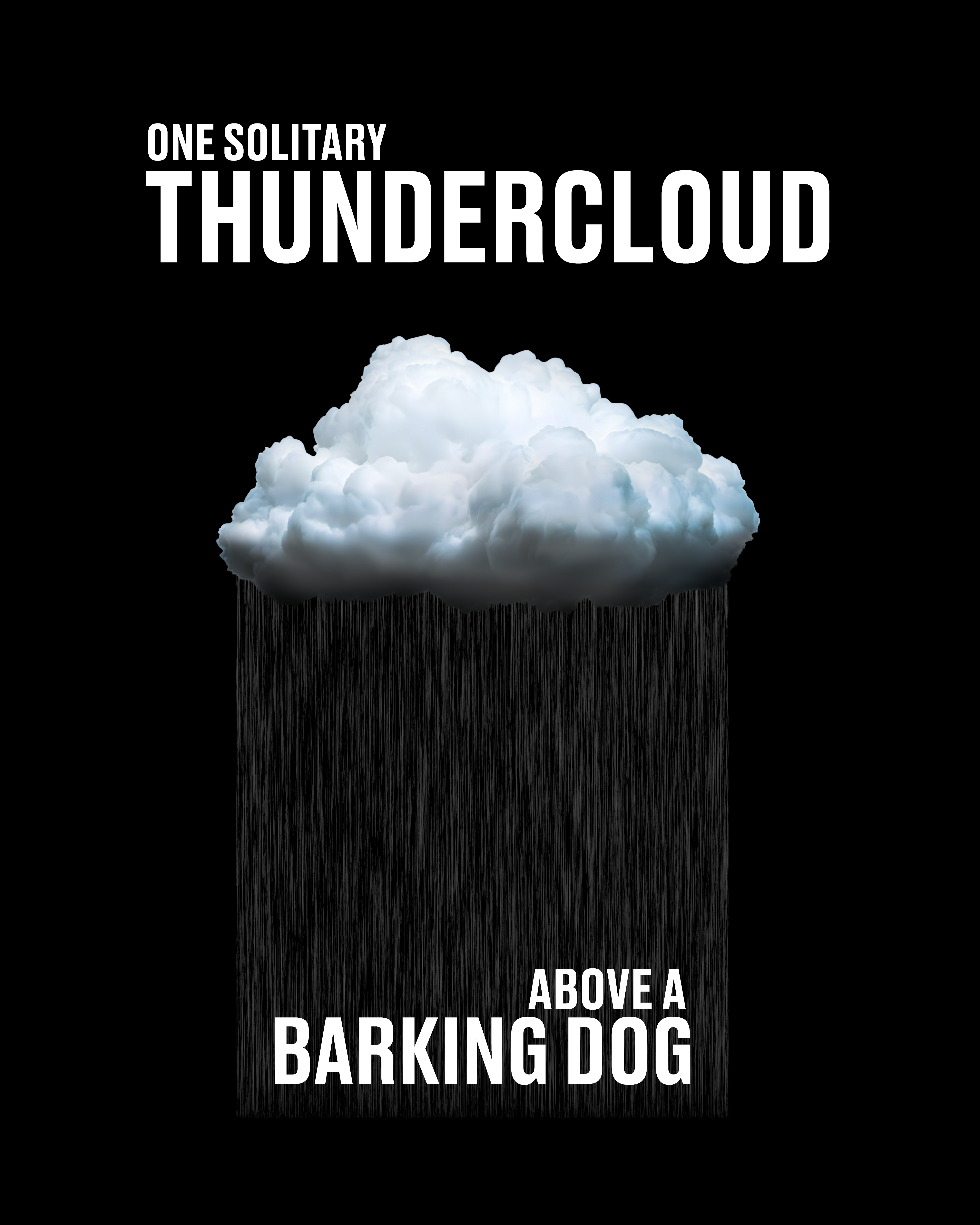
ONE SOLITARY THUNDERCLOUD ABOVE A BARKING DOG

PLAY THE DEMO NOW
Now taking feedback on the demo. Leave your anonymous thoughts and help me improve the game.
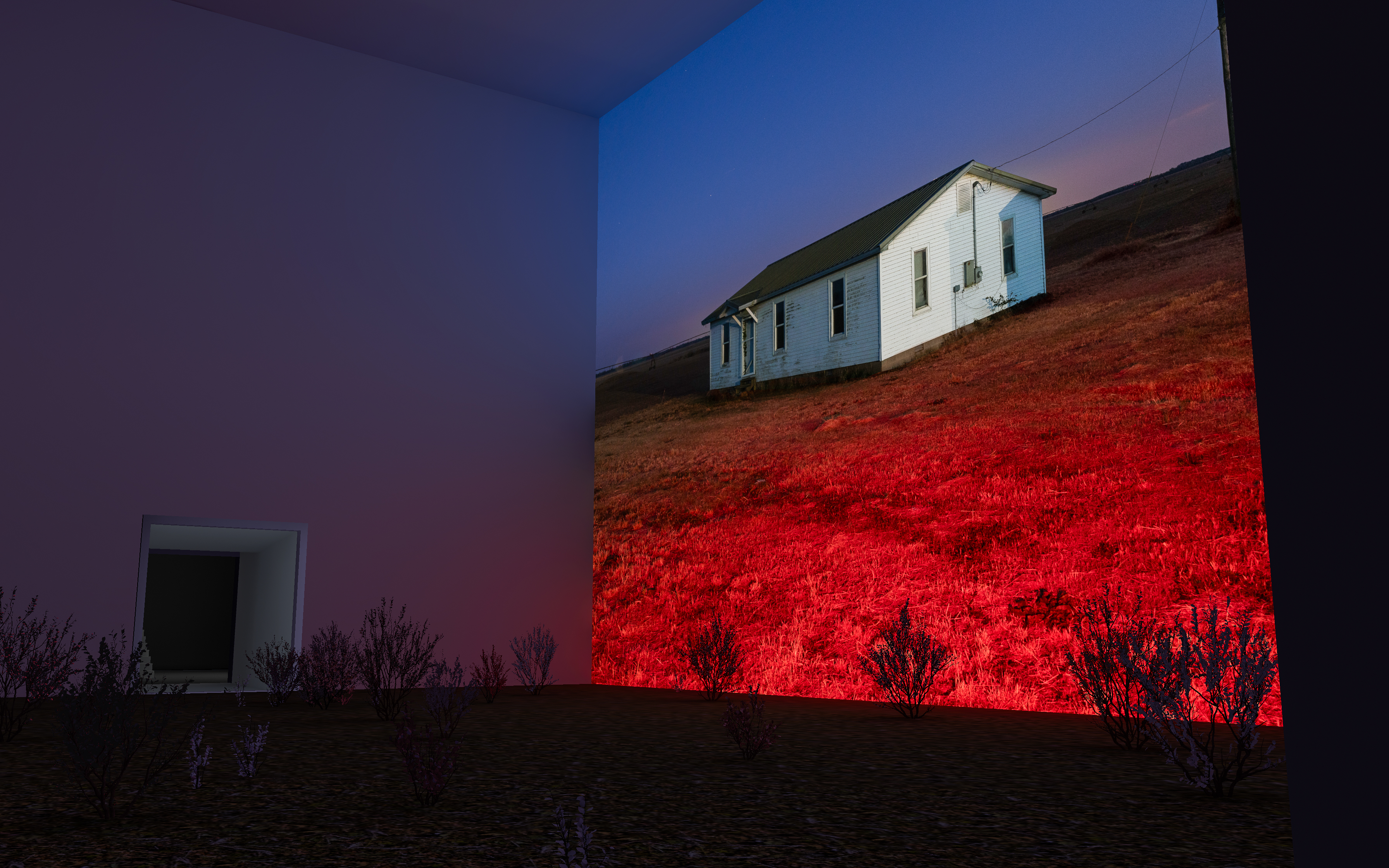
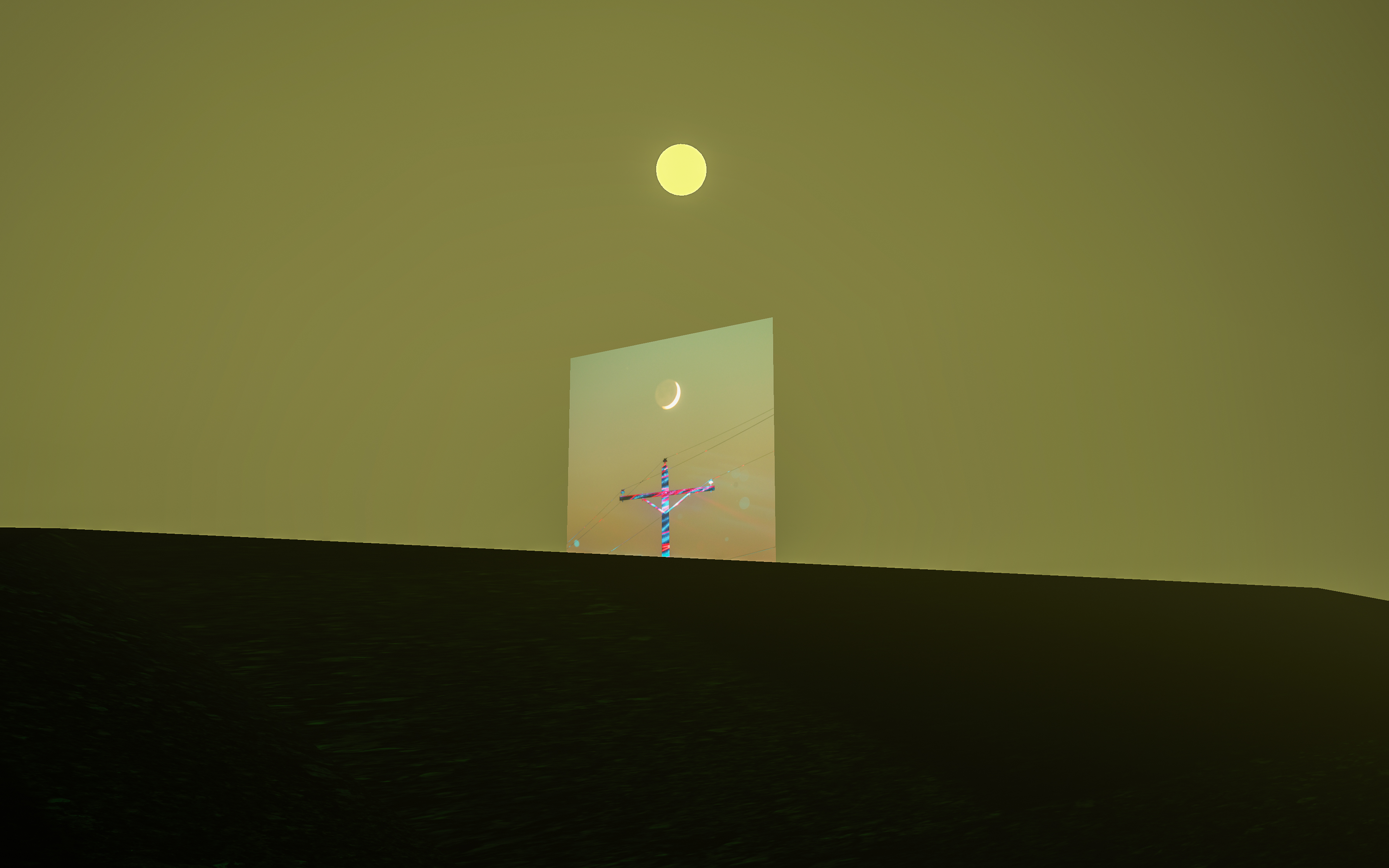
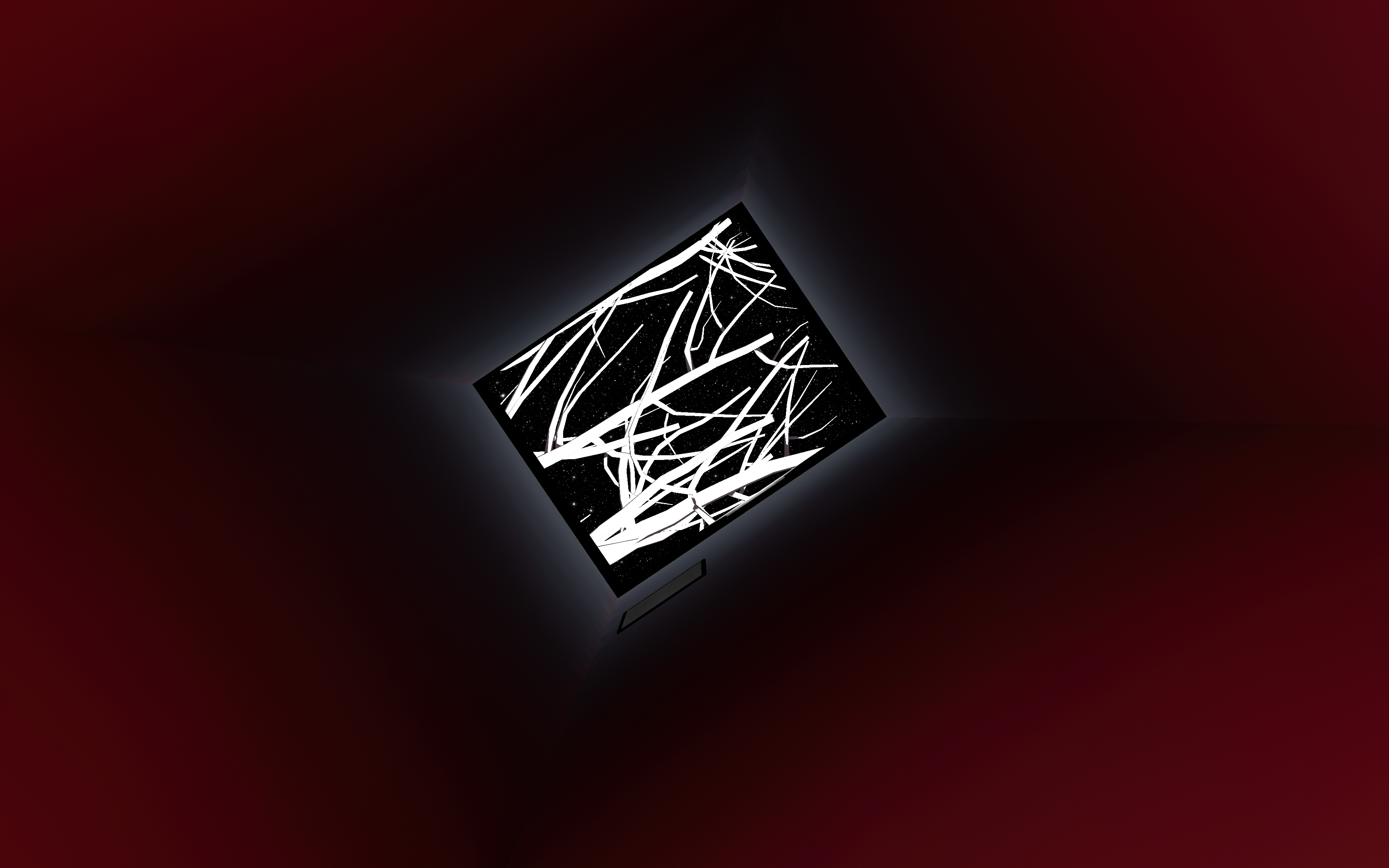
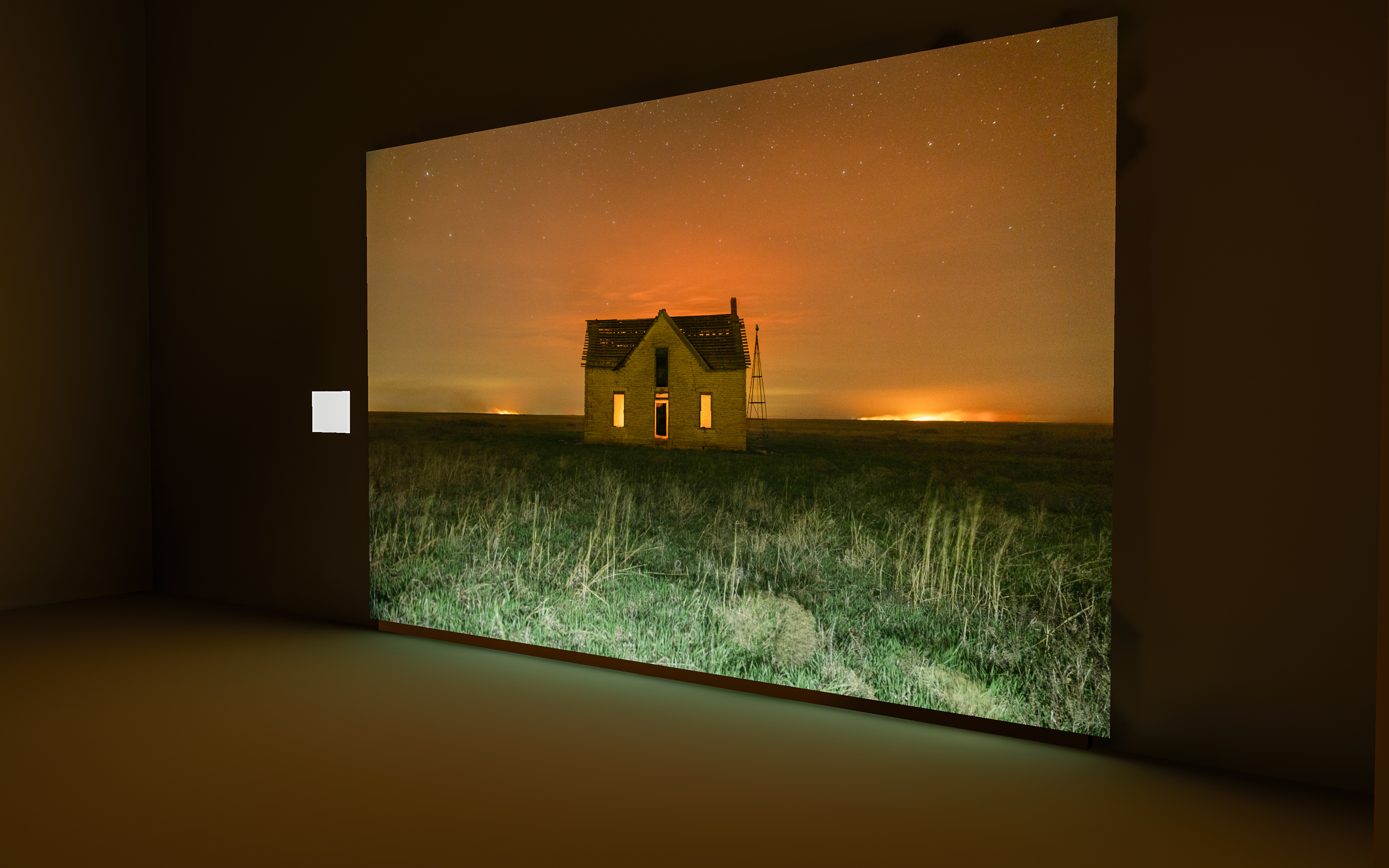
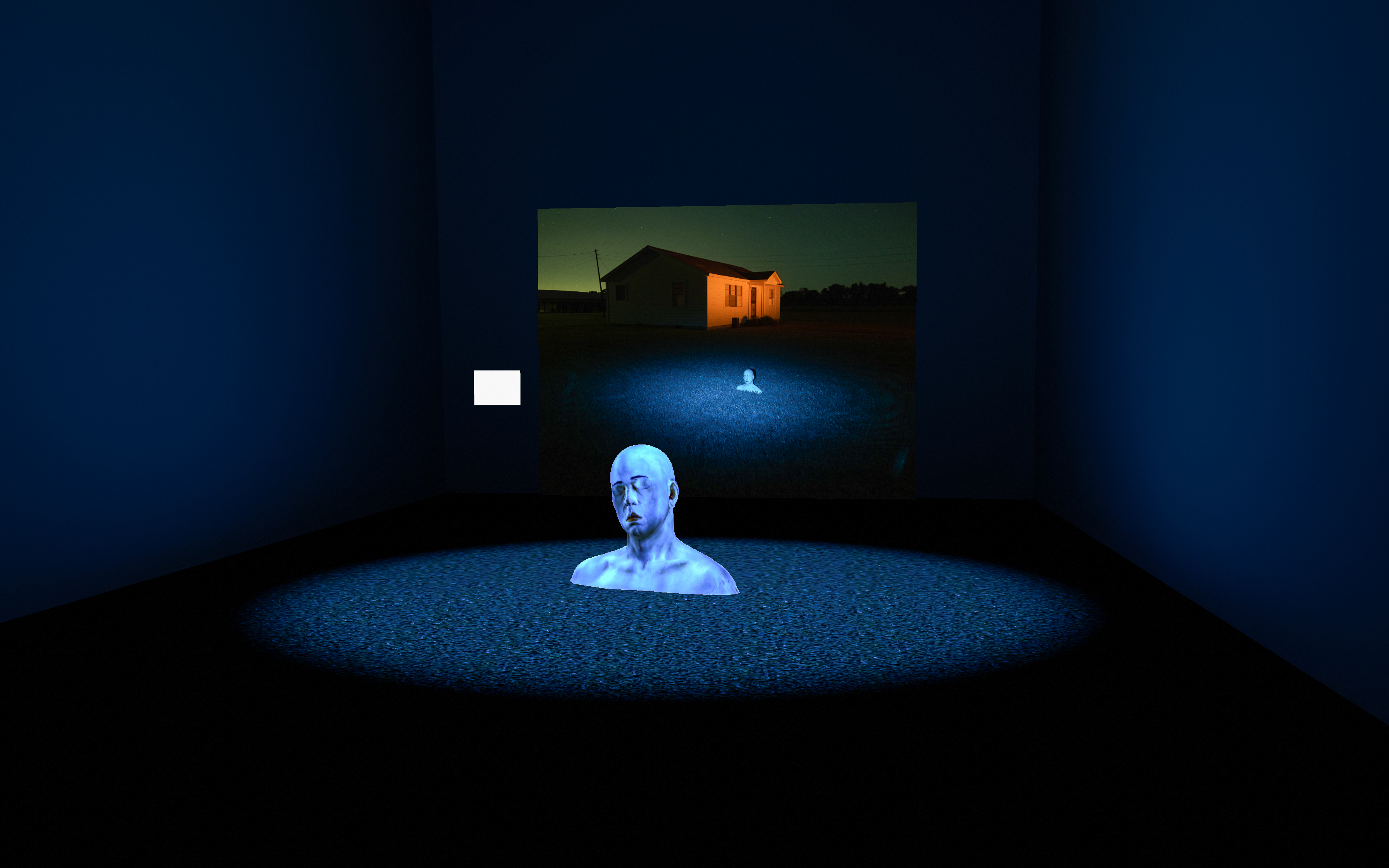
You discover a farmhouse lost to the Kansas prairie. When you step through the door, the house opens before you taller and deeper than the exterior walls should allow. Photographs line the rooms: rural scenes of a world caught between dream and decay. The accompanying placards faded long ago, but your arrival has stirred something within them: a voice. The gallery begins speaking to you, uncertainly at first, then with growing conviction. The more rooms you explore, the more it remembers, bringing you closer to the truth of who built this place and what lies at its center.
What is this?
One Solitary Thundercloud Above a Barking Dog is part virtual gallery space, part video game. It’s a first-person experience in which you explore the impossible interior of an isolated Kansas farm house turned art gallery.
How do I play it?
Can I play it on my phone?
No.
Do I need a gaming computer to play it?
No, but because the game features very large hi-res photos, older computers may struggle.
What are the controls?
The game is playable with mouse/keyboard or controller.
Move: WASD / Left Joystick
Look: Mouse / Right Joystick
Interact: Left Click / Right Trigger
Sprint: Shift / Left Trigger
Jump: Space / X
Menu: ESC / Start
Is it complete or ongoing?
This is a demo of a much longer game-in-progress. Follow me on IG for announcements about future updates.
Will it be available on Steam?
The completed game will be on steam.
I’m not a gamer. Can I watch a playthrough?
Right here (opens YouTube). Before watching, I’d urge you to try playing it first. I designed it with simple controls for anyone to be able to play. A walkthrough video doesn’t capture the sense of freedom of exploration that I want you to feel while playing.
Why did you make it?
In July of 2025, I was staying with my friend Kunal in SF. We were up late chatting, and I told him how I was struggling to find a publisher for my photo book.
“Can I be real with you?” he said.
Uh oh, I thought.
“A book isn’t right for your stuff,” he said and elaborated how it wouldn’t capture the creepy atmosphere of my work. “Start with the feeling you want to create,” he said, “and let that dictate the best venue for your work.”
I thought about that for weeks.
Eventually, I came to the idea that the ideal space to present my work would be an isolated farmhouse in the country, and all of the interior walls would be black and very high, and the photos would be glowing, as if lit from within. A cool idea, but not exactly easy to pull off. I was thinking of other exploration-based experiences like Sleep No More, Meow Wolf, and Radiohead’s Kid A Mnesia Exhibition. It was the last one that got me exploring the idea of creating the gallery virtually. I didn’t know anything about making a game, but I love a project, so I dove into Unity, and about 200 hours later I had the first part of the exhibit ready to play.
Acknowledgements
Thank you to all of my friends and family who play-tested early versions of this, and whose keen observations and technical knowledge made it that much better: Kendyl Mounce, Todd Chappell, Matt Hunter, Tim Chawaga, Alex Crawley, Kunal Kumar, Sandeep Luthra, Joni Park, and Peter Zastoupil.
Credits
Created by Gardner Mounce
Music by Todd Chappell & Blair Gavine
You discover a farmhouse lost to the Kansas prairie. When you step through the door, the house opens before you taller and deeper than the exterior walls should allow. Photographs line the rooms: rural scenes of a world caught between dream and decay. The accompanying placards faded long ago, but your arrival has stirred something within them: a voice. The gallery begins speaking to you, uncertainly at first, then with growing conviction. The more rooms you explore, the more it remembers, bringing you closer to the truth of who built this place and what lies at its center.
What is this?
One Solitary Thundercloud Above a Barking Dog is part virtual gallery space, part video game. It’s a first-person experience in which you explore the impossible interior of an isolated Kansas farm house turned art gallery.
How do I play it?
-
Mac: Click Download above. Follow the on-screen instructions. Unzip the App. Double-click the unzipped app.
-
PC: Click Download above. Follow the on-screen instructions. Unzip the folder. Keep all of the files in the folder. Double-click the “.exe” file to run the game. If you get a message prompting you to “Extract All” files, do it.
Can I play it on my phone?
No.
Do I need a gaming computer to play it?
No, but because the game features very large hi-res photos, older computers may struggle.
What are the controls?
The game is playable with mouse/keyboard or controller.
Move: WASD / Left Joystick
Look: Mouse / Right Joystick
Interact: Left Click / Right Trigger
Sprint: Shift / Left Trigger
Jump: Space / X
Menu: ESC / Start
Is it complete or ongoing?
This is a demo of a much longer game-in-progress. Follow me on IG for announcements about future updates.
Will it be available on Steam?
The completed game will be on steam.
I’m not a gamer. Can I watch a playthrough?
Right here (opens YouTube). Before watching, I’d urge you to try playing it first. I designed it with simple controls for anyone to be able to play. A walkthrough video doesn’t capture the sense of freedom of exploration that I want you to feel while playing.
Why did you make it?
In July of 2025, I was staying with my friend Kunal in SF. We were up late chatting, and I told him how I was struggling to find a publisher for my photo book.
“Can I be real with you?” he said.
Uh oh, I thought.
“A book isn’t right for your stuff,” he said and elaborated how it wouldn’t capture the creepy atmosphere of my work. “Start with the feeling you want to create,” he said, “and let that dictate the best venue for your work.”
I thought about that for weeks.
Eventually, I came to the idea that the ideal space to present my work would be an isolated farmhouse in the country, and all of the interior walls would be black and very high, and the photos would be glowing, as if lit from within. A cool idea, but not exactly easy to pull off. I was thinking of other exploration-based experiences like Sleep No More, Meow Wolf, and Radiohead’s Kid A Mnesia Exhibition. It was the last one that got me exploring the idea of creating the gallery virtually. I didn’t know anything about making a game, but I love a project, so I dove into Unity, and about 200 hours later I had the first part of the exhibit ready to play.
Acknowledgements
Thank you to all of my friends and family who play-tested early versions of this, and whose keen observations and technical knowledge made it that much better: Kendyl Mounce, Todd Chappell, Matt Hunter, Tim Chawaga, Alex Crawley, Kunal Kumar, Sandeep Luthra, Joni Park, and Peter Zastoupil.
Credits
Created by Gardner Mounce
Music by Todd Chappell & Blair Gavine